✓
A line delivered at their 08:00
Write it at midnight your time; Dastak sends it from your phone when their quiet hours end.
 Dastak
For exactly two people
Dastak is a private line between you and one person. A knock in a rhythm that is yours. A letter that opens when they are sad. A window left open all evening. Chat, calls, games and a question you both answer blind — encrypted end to end, so no one else reads a word.
One subscription for both of you. Android first; iPhone next. No ads, no analytics, nothing read on a server.
Not a feed to keep up with — small, well-timed ways of being there, from the first message of their morning to the last breath before sleep. Scroll sideways.
Write it at midnight your time; Dastak sends it from your phone when their quiet hours end.
Hold the Heading-out knock and add the minutes. Their shade counts down until you knock “I'm home”.
Tap a pattern once, name it, and send it from the lock screen or Quick Settings. Their phone buzzes exactly that.
Same work-and-break clock on both phones from the same second, the same buzz at every change.
Sunset where they are in 40 minutes, the moon you both see, the distance between you. Worked out on the phone, never looked up.
Seal a message to a date, or to a mood. Their phone opens it; no notification ever says what unlocked it.
Chess, checkers, Connect Four, tic-tac-toe, cooperative hangman, would-you-rather. One card per match in the chat; every move carries the whole board.
An audio line meant to stay open for hours: soft ring, about 7 MB an hour, both of you quiet until one taps “Speak up”.
Two minutes of breathing from the same instant, a buzz at every turn, and a goodnight knock at the end. Or a whisper: three seconds of your voice inside a knock.
Three things you already do, made for one person — plus the rituals below, every one of them inside the same encryption.
Three knocks with your own words and emoji, haptic phrases in your own rhythm, three-second whispers, a Heading-out knock with an arrival time. From Home, the lock screen or Quick Settings. Keep a streak, together.
Text, photos, stickers and GIFs, video notes, voice notes, files, sketches, six games. Reply by swiping, react, edit, pin, star. View-once, no-saving, disappearing, hide-until-held, sealed letters, and voice notes that unlock at an hour you choose.
Voice and video, peer to peer and encrypted end to end. Switch voice to video mid-call, share your screen, send a flying heart, chat during the call. Or leave an open window: a soft audio line that stays up for hours.
Research on long-distance couples keeps finding the same thing: it is not the big calls that keep people close, it is the ambient, co-created, nonverbal stuff. So that is what we built.
Record a tap rhythm up to four seconds long and give it a name. Your partner feels your rhythm, not a generic buzz. Twelve of your own.
Hold to record up to three seconds of your voice. It travels inside the knock itself — no upload, no download — so it lands on the worst network.
“Open when…” a date comes, or when they set a mood. A photo can be sealed too. Their phone decides when it opens.
Draw with a finger. It is sent as strokes, not a picture, and draws itself on their screen the first time they look.
Chess with full rules, checkers, Connect Four, tic-tac-toe, cooperative hangman with a hint, would-you-rather. Both phones check every move.
“Home by 23:30.” Your phone reminds you to tap I'm home; only if you haven't by then does your partner's phone quietly say so. You stay in control.
Their local time and quiet hours, “probably asleep until 07:00 their time”, the next window when you are both awake — and the sky above them. Nothing is stored on a server; it is computed from a few bytes they chose to share.
In for four, out for six, twelve times, both phones from the same second. It ends with a goodnight knock.
A Heading-out knock with an arrival time becomes a live countdown in their shade — and a status-bar chip on Android 16.
A soft audio line for the whole evening apart. Ducked to a murmur until one of you speaks up; the screen may sleep; the call stays.
A message from this date a year ago, surfaced on Home once a day. Send it back as a reply. In December, a year-in-knocks card to share.
A surprise blurred until they press and hold. On the daily question, guess their answer before both are revealed.
Real screens from build 55 on two paired test phones: Home with the rituals, the chat with a sketch and two games in progress, chess, the knock tile, a wind-down in progress, the daily question, dates and the privacy settings.
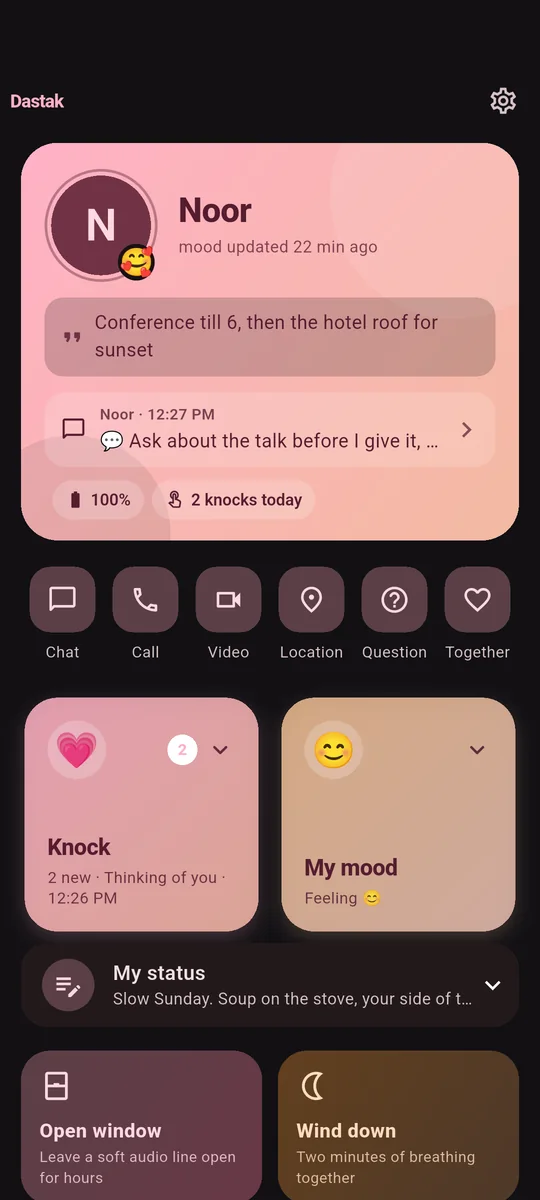
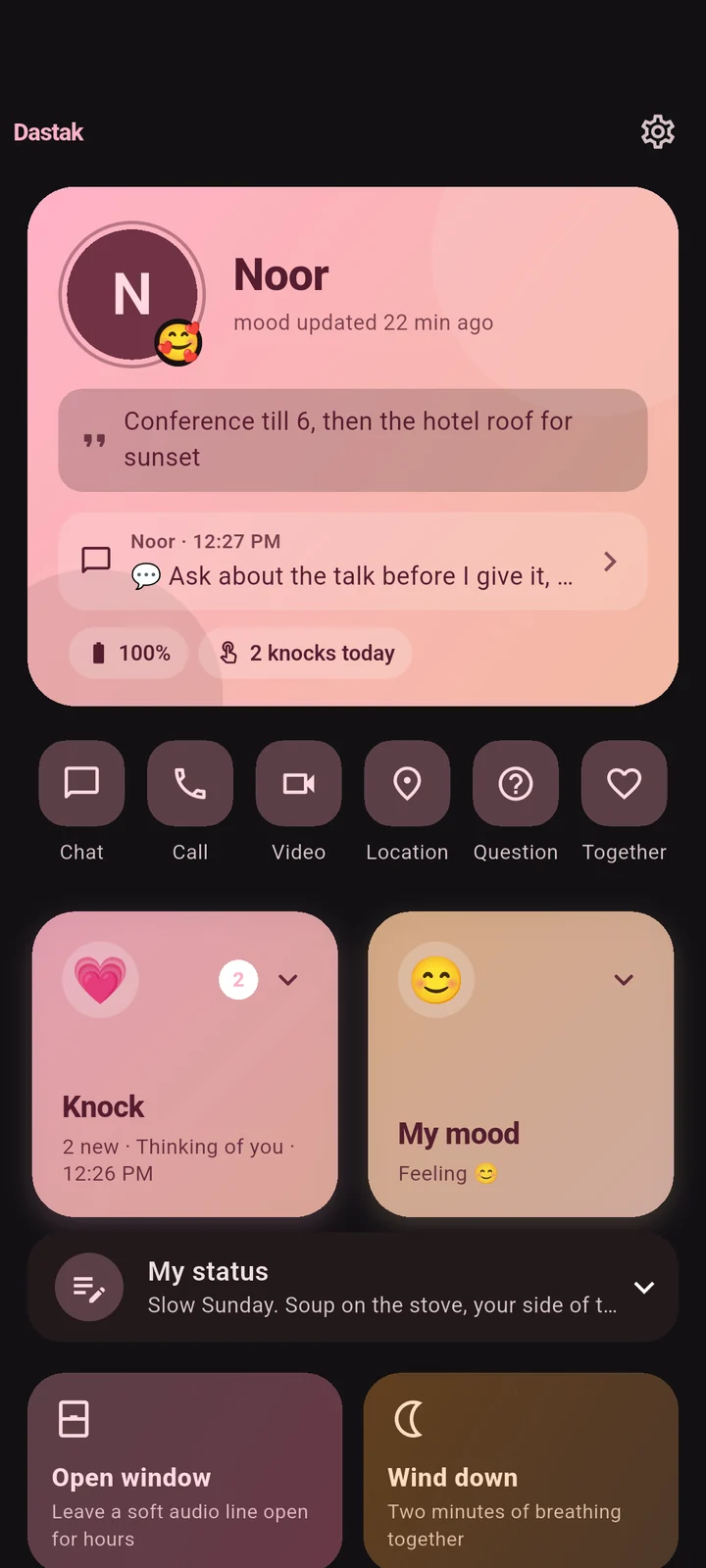
Home: your partner's card with their mood, status and last line, the quick actions, Knock and My mood.
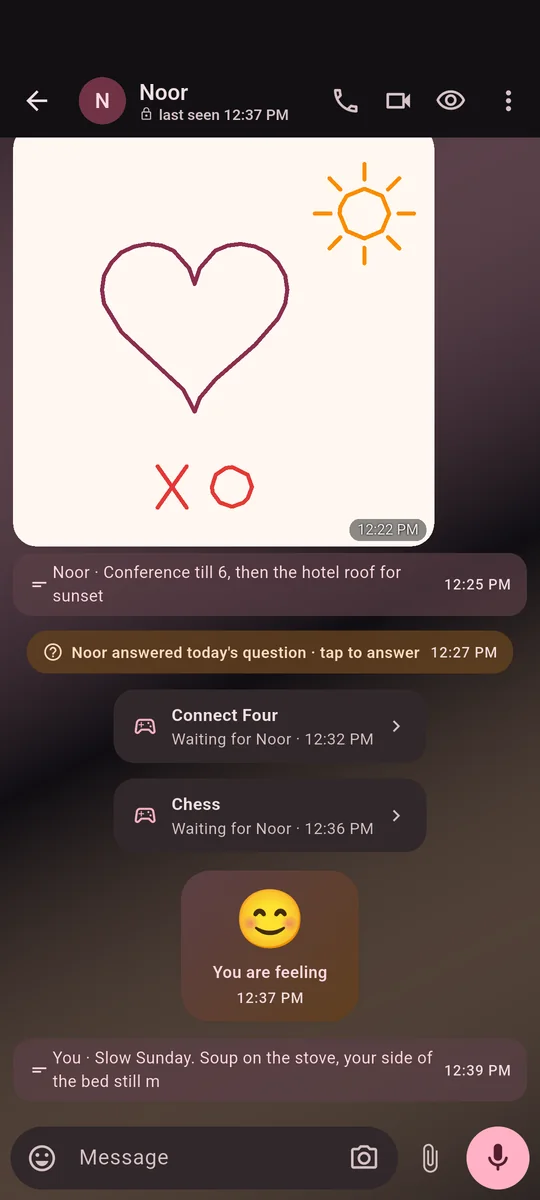
The chat: a sketch, a status line, the daily question, two games waiting, a mood, a message.
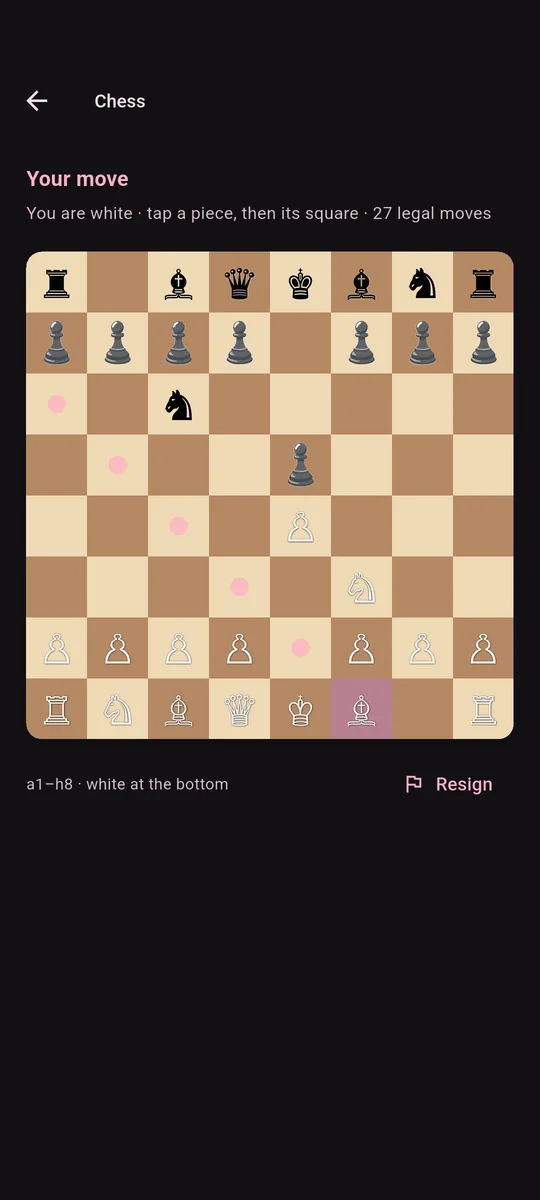
Chess with full rules. Tap a piece and its legal squares light up; a game can sit for days.
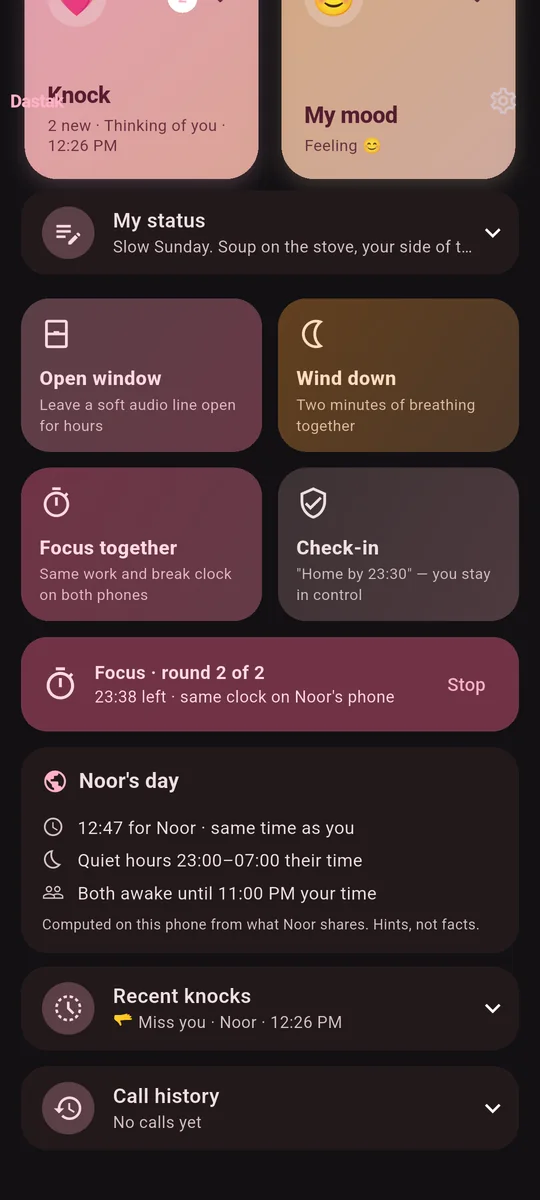
Home, further down: open window, wind down, focus together, check-in, a running focus clock and your partner's day.
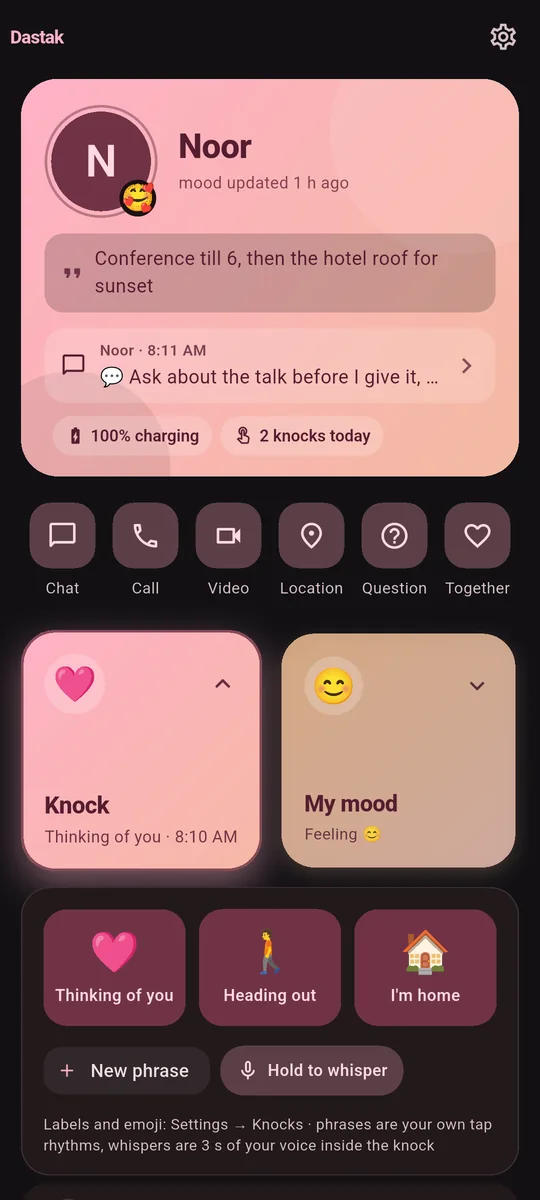
Three knocks with your own words, haptic phrases in your own rhythm, a three-second whisper.
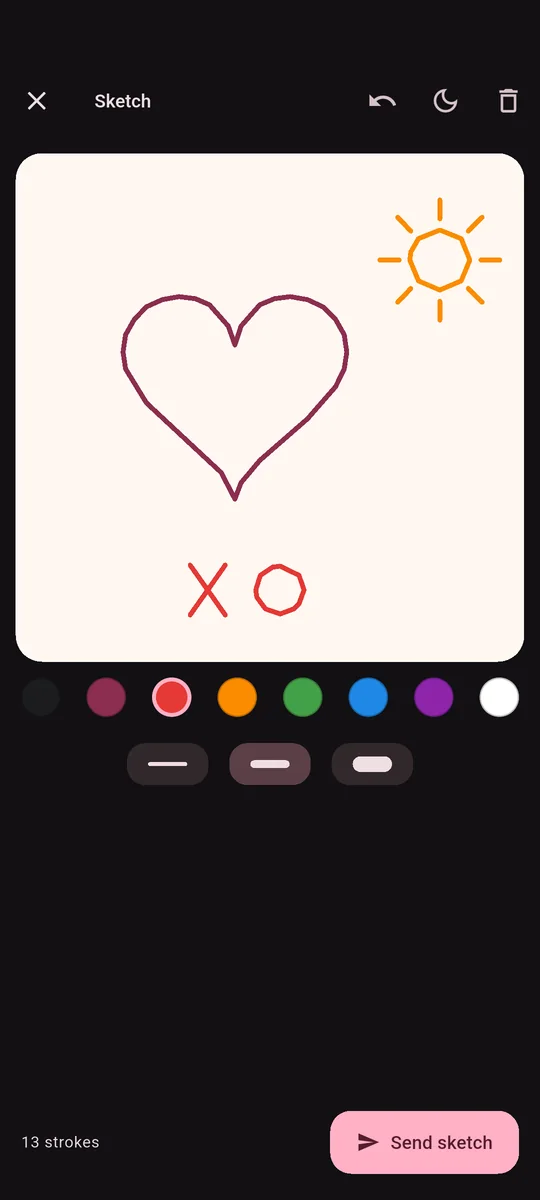
Draw with a finger. The sketch travels as strokes and draws itself on the other phone.
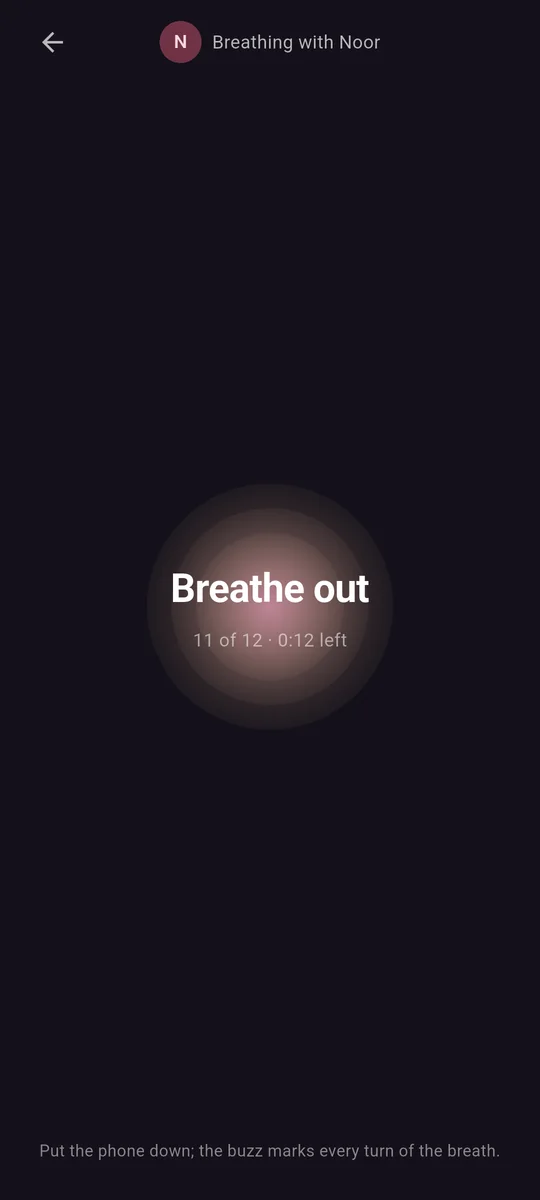
Wind down together: both phones breathe from the same second, a buzz at every turn.
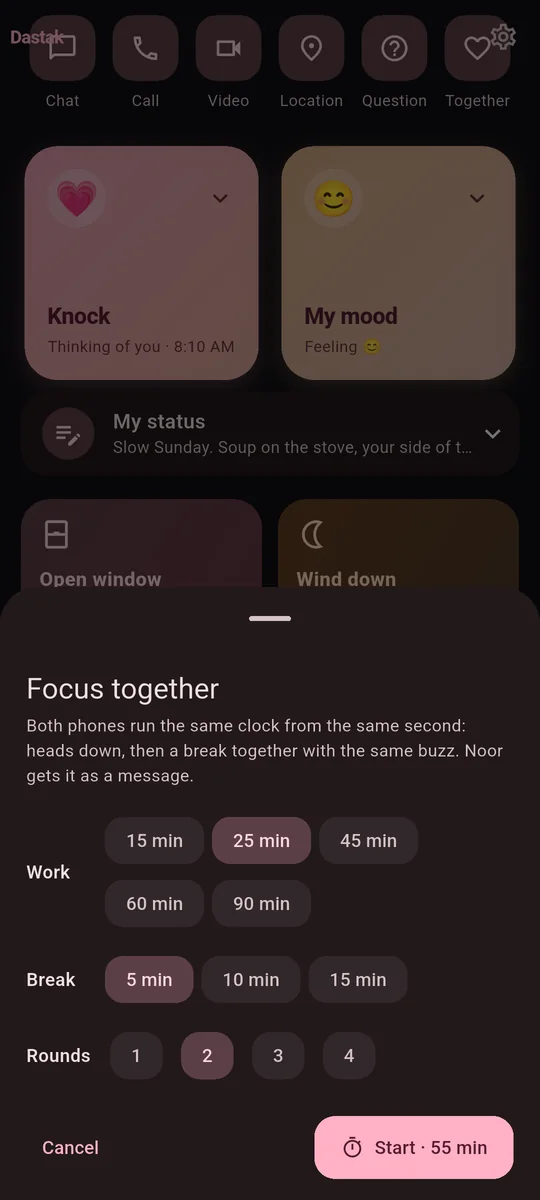
Focus together: the same work-and-break clock on both phones.
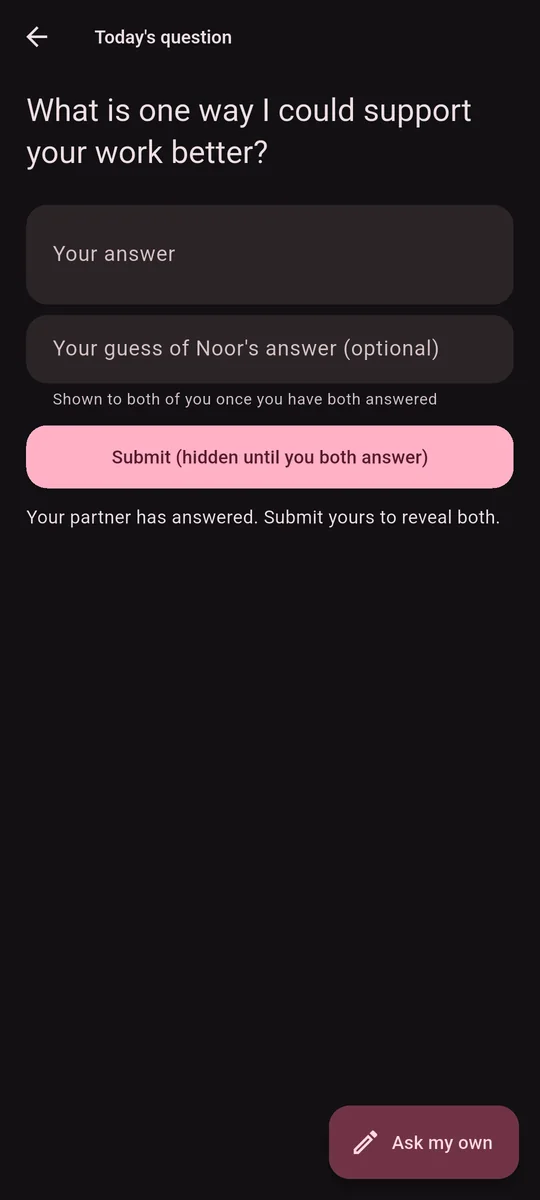
The daily question. Your partner has answered; yours stays hidden until you both have.
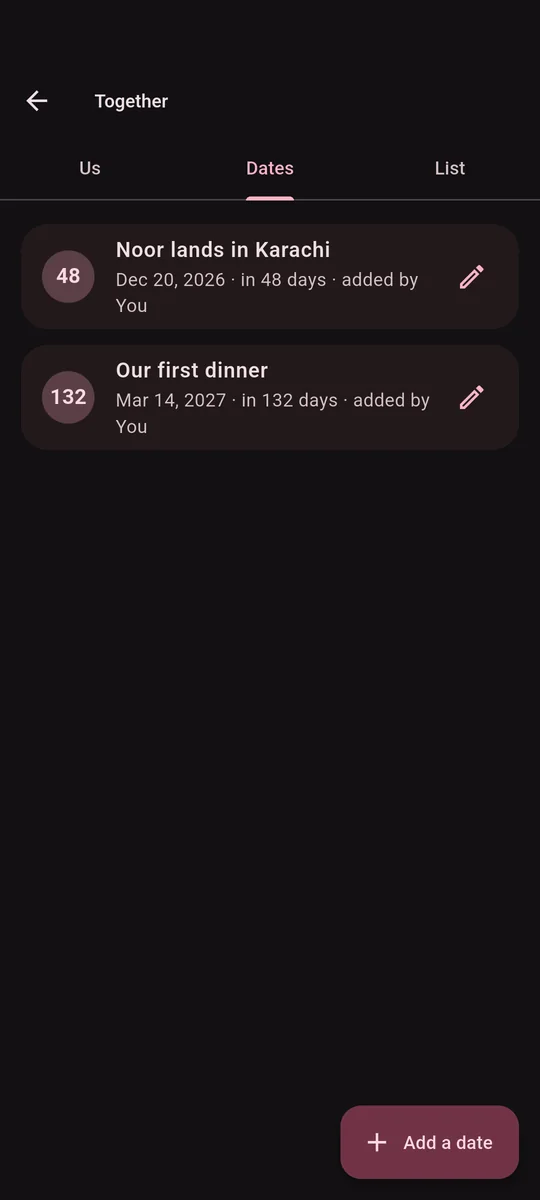
Together: the dates you count down to, and a shared list for when you are back.
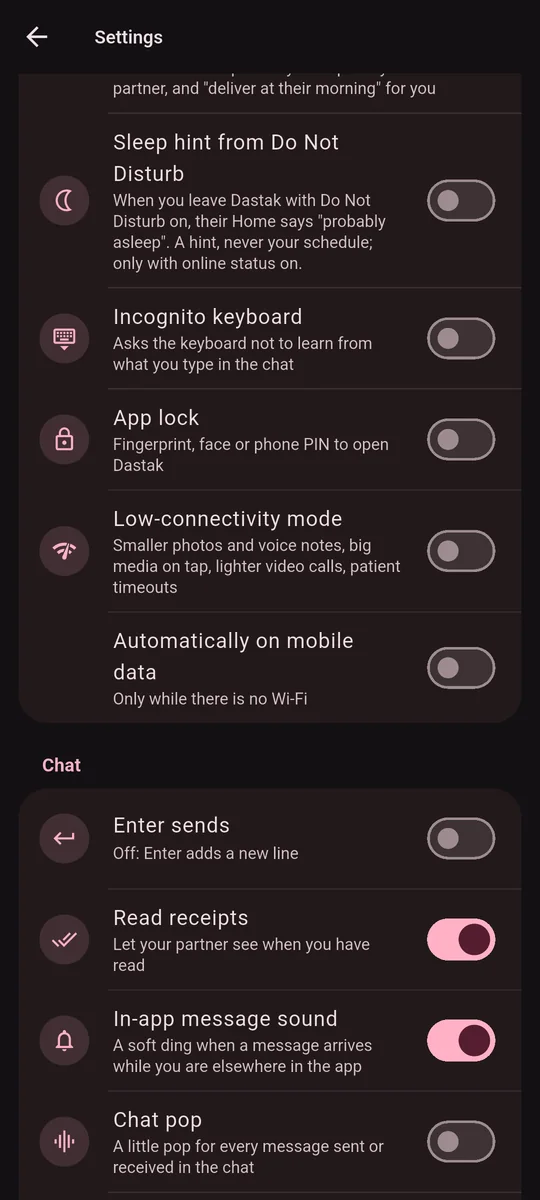
Privacy & data: incognito keyboard, app lock, low-connectivity mode, read receipts.
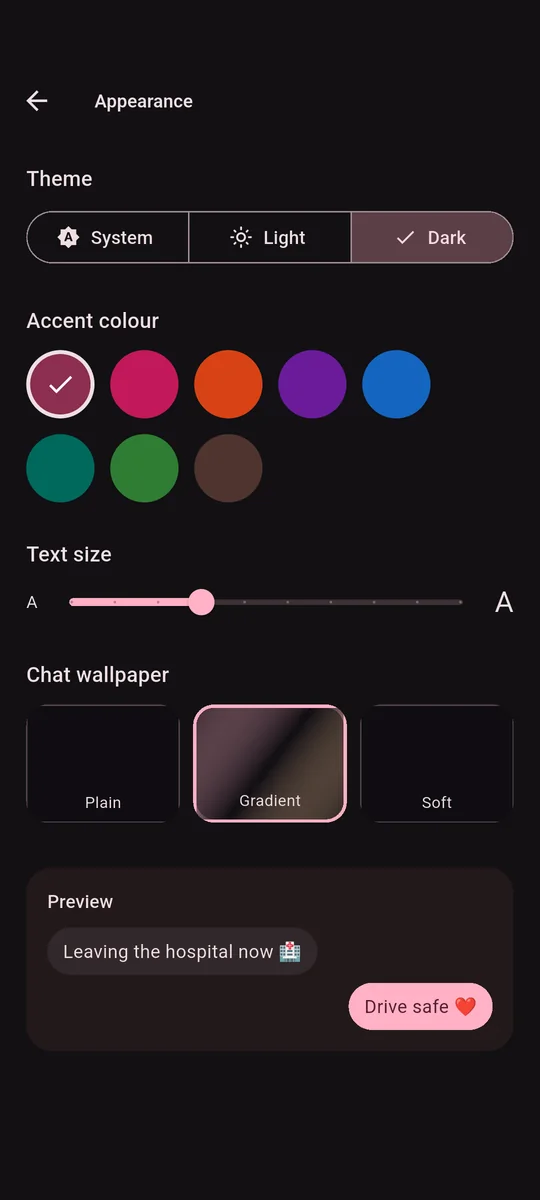
Appearance: theme, accent colour, text size and chat wallpaper.
Most couple apps read what you type so they can sell you prompts. Dastak is built so that it cannot — not the servers, not the people who run them, and not an AI.
Subscribe, send your partner the code, and you both have everything. Billed through Google Play; cancel any time.
Prices in US dollars; your store shows local pricing. The invited partner never pays.